Content pillar · AI Tasks
AI tasks: the computer vision building blocks — page 2
The technical capabilities that interpret images and video — detecting, classifying, segmenting, tracking, reading and measuring. They are selected according to the operational problem, not the other way round, and sized for the Edge hardware that runs them.
Browse ai tasks
Showing 13–21 of 21 ai tasks
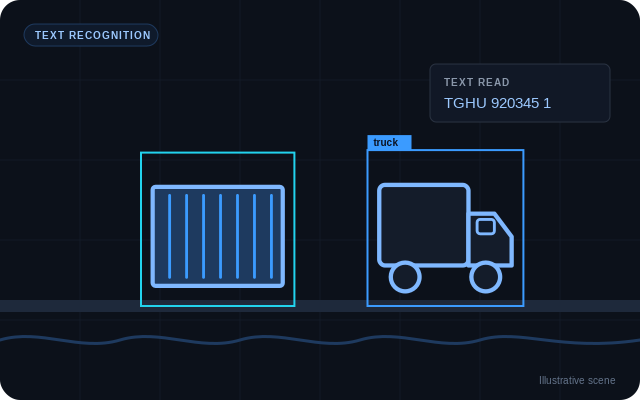 Reading text in images and videoOCR and Text RecognitionOptical character recognition (OCR) reads text visible in images — labels, codes, container numbers, displays and gauges. In video analytics it usually combines a text-detection step with a recognition model, and works best on clear, legible text.View details
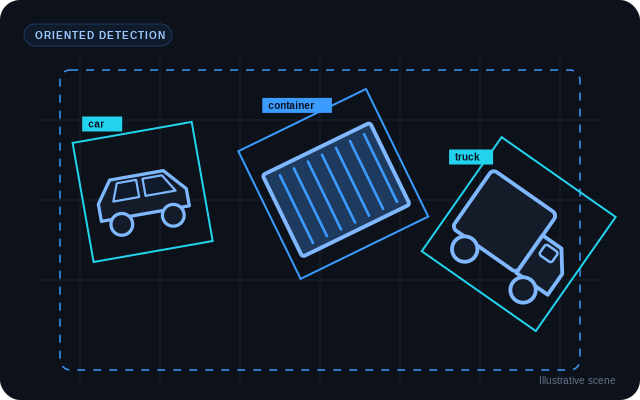 Rotated boxes for angled objectsOriented Object Detection (OBB)Oriented object detection draws rotated bounding boxes that follow an object's orientation. It fits objects seen from above or at an angle — vehicles in aerial images, ships, containers, panels — far more tightly than standard axis-aligned boxes.View details
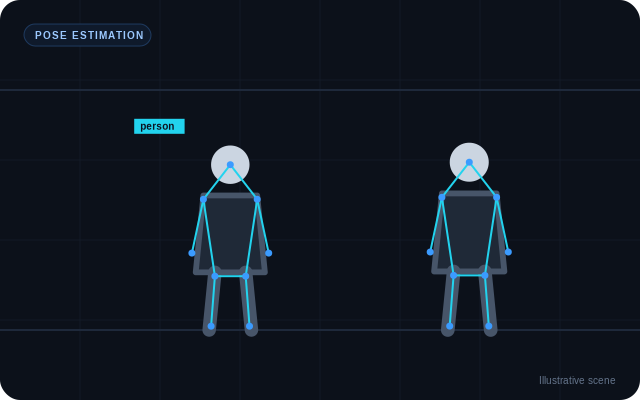 Body and object keypointsPose EstimationPose estimation locates keypoints — such as shoulders, elbows, knees or the corners of an object — and connects them into a skeleton or structure. It adds information about posture and orientation that boxes cannot provide.View details
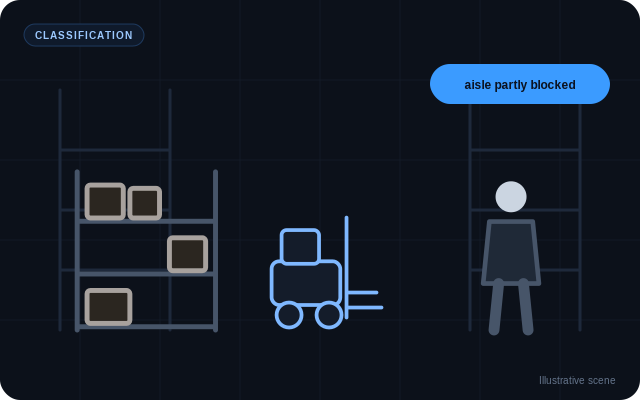 Interpreting the whole viewScene UnderstandingScene understanding interprets an image as a whole — what kind of place it is, which objects are present, how they relate and what state the area is in. It combines several tasks and increasingly uses vision-language models to answer questions about a scene.View details
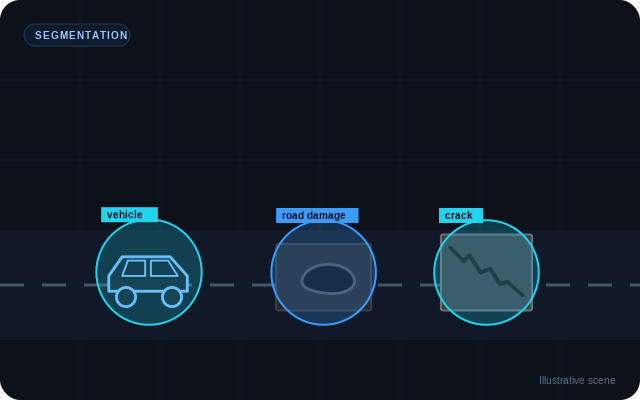 Core computer vision taskSemantic SegmentationSemantic segmentation assigns a class to every pixel of an image — road, floor, water, smoke, crop, background — producing a map of regions rather than individual objects. It suits problems about areas and surfaces.View details
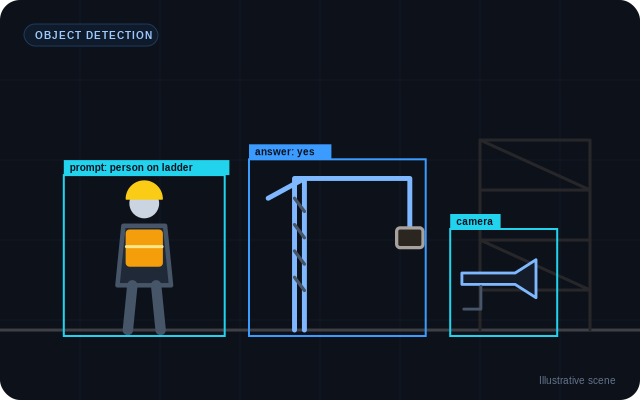 Prompted detection, captions and visual questionsVision-Language AnalysisVision-language models connect images with text. They can detect or segment objects named in a prompt, describe a scene, or answer a question about an image — useful for rapid prototyping, rare classes and flexible review, alongside specialized models for production workloads.View details
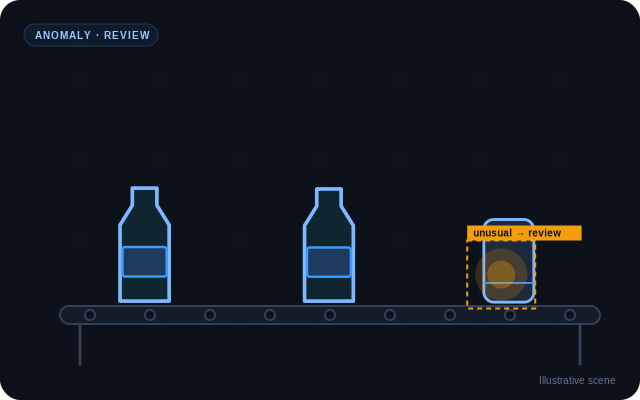 Finding what differs from normalVisual Anomaly DetectionVisual anomaly detection learns what normal looks like and flags images, regions or events that deviate from it. It is valuable when defects or problems are rare, varied or not known in advance.View details
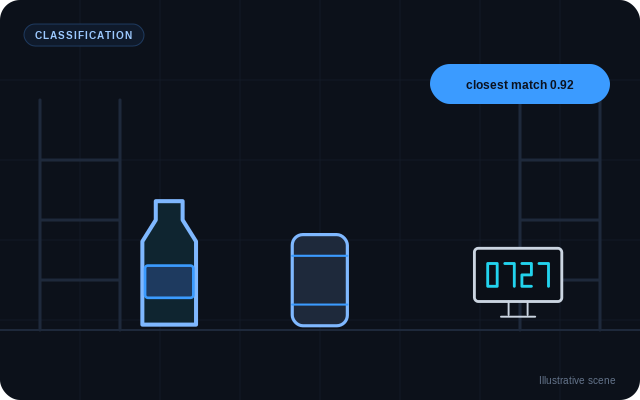 Finding images and items that look alikeVisual Similarity SearchVisual similarity search turns images or detected objects into numeric embeddings and compares them, so a system can find the closest match in a reference catalog, group similar items, or recognize products and parts that were never part of a fixed class list.View details
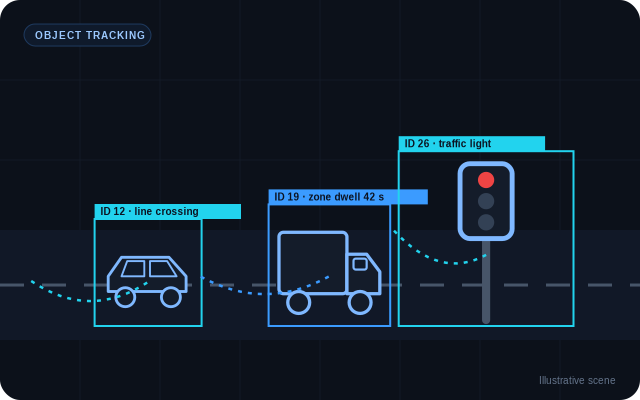 Crossings, dwell, speed and pathsZone and Line AnalyticsZone and line analytics apply rules to tracked objects — counting line crossings, measuring time spent in a zone, estimating speed and comparing paths with expected routes. They turn tracks into operational events such as entries, dwell times, queue lengths and wrong-way movement.View details
No ai tasks match your search.
Try fewer words or clear a filter. If your challenge is not listed, you can still describe it in a PoC request.
Proof of Concept
Have a real detection, tracking or inspection problem?
Let's assess it. Share a short video and describe what needs to be detected, read, counted or measured — no technical specification needed.
Request a PoCSubmit a video & describe your challenge
Every request is reviewed for technical feasibility. PoC scope, timing and terms are agreed individually.